

NEW! Now Testing for PFAS ‘Forever Chemicals’

We can help
you obtain
compliance with
PFAS
testing solutions
EPA 537.1 REGULATORY COMPLIANT
for all Community and
Public Water Systems
PWS State of Oregon Report



Ways to
Test
We Follow EPA 537.1 & State Recommendations

We dispatch certified water collection field samplers to your location.

1.
2.
You can pick up water sampling bottles and instructions for sample collection, and drop the samples off at the lab.
3.
Purchase a DIY send-in test kit online. Follow step-by-step instructions and take your samples at home, send them in, or drop off at the lab for testing and results.
PFAS DIY Test Kits
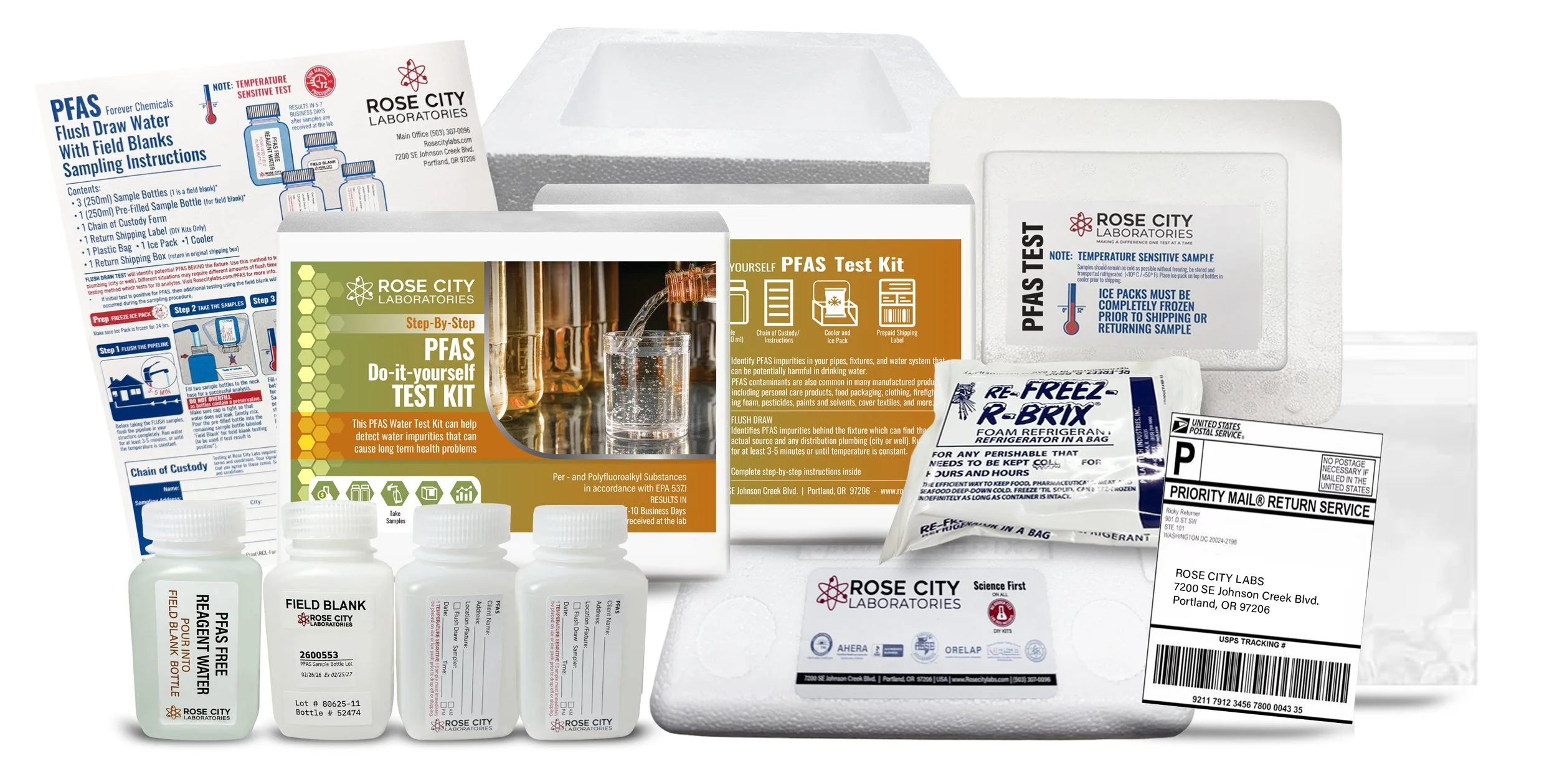
All-in-One Test Kit with
Easy-to-Follow Instructions
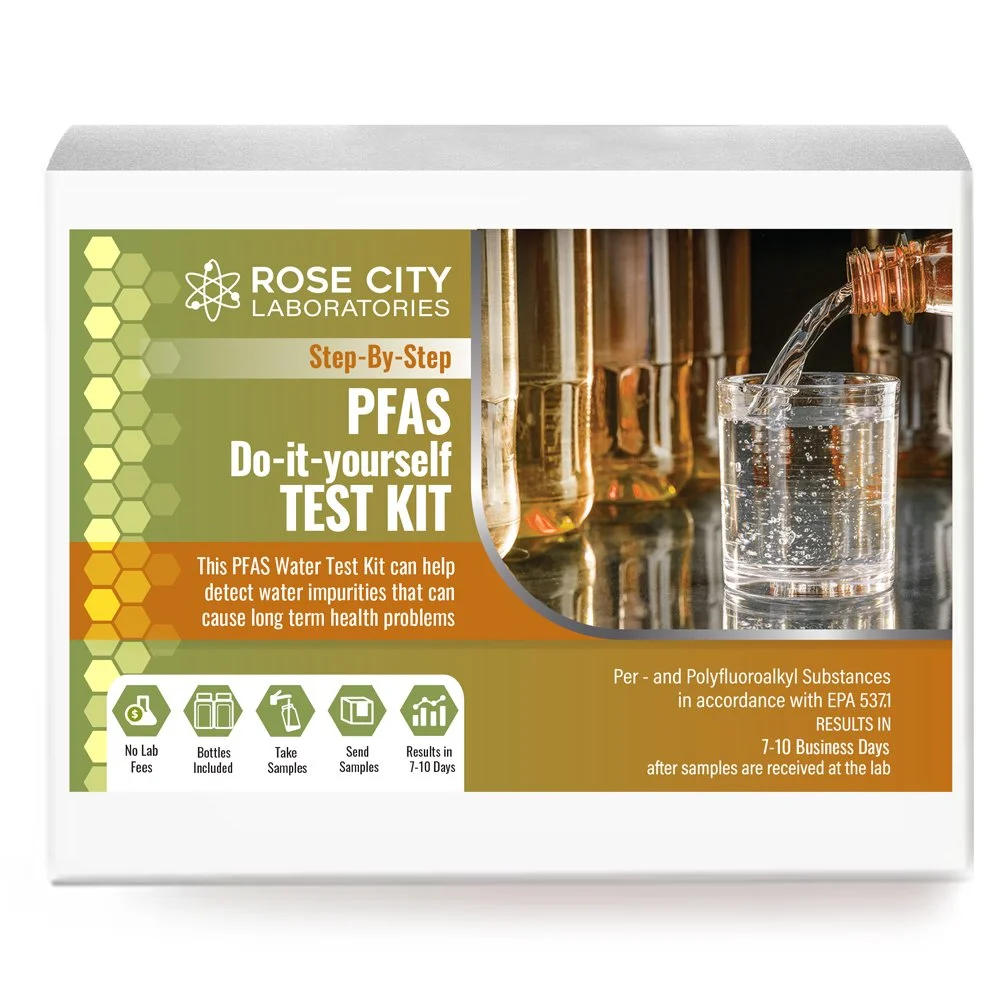
PFAS WATER TESTING KIT
$335

This Step-by-Step Home PFAS testing kit will help you identify PFAS impurities in your water supply and hot water source that can be potentially harmful to drinking water. Testing covers 18 contaminants following EPA 537.1. PFAS contaminants are also common in many manufactured products, including personal care products, food packaging, clothing, firefighting foam, pesticides, paints and solvents, cover textiles, and more. Results in 7-10 Days.
• Sampling Bottles • Easy to follow instructions • Ice Pack • Cooler • Return Shipping Label • Return Shipping Box and ALL LAB FEES included.
NOTE: Shipping services are provided by the United States Postal Service (USPS). Rose City Labs is not responsible for delays, damage, or lost packages caused by the USPS, weather, or other courier issues.
This Step-by-Step Home PFAS testing kit will help you identify PFAS impurities in your water supply and hot water source that can be potentially harmful to drinking water. Testing covers 18 contaminants following EPA 537.1. PFAS contaminants are also common in many manufactured products, including personal care products, food packaging, clothing, firefighting foam, pesticides, paints and solvents, cover textiles, and more. Results in 7-10 Days.
• Sampling Bottles • Easy to follow instructions • Ice Pack • Cooler • Chain of Custody Form • Return Shipping Label • Return Shipping Box
ALL LAB FEES INCLUDED
Testing Methods and What We Test
• We test PFAS following EPA 537.1, for drinking water, for all Community and Public Water Systems.
This complies with regulatory testing practices by an accredited lab.
• We test via LC/MS/MS with NELAP/ORELAP accreditation.
• Eighteen (18) analytes are tested.
What are PFAS?
Why are PFAS a concern?
PFAS are referred to as “forever chemicals,” meaning that when they contaminate soil or groundwater, they do not easily break down or degrade into a less harmful chemical form.
Unsafe storage, improper disposal, and inadequate containment of these chemicals have resulted in contamination of soil, waterways, and groundwater supplies in some locations.
PFAS contamination can migrate to groundwater and surface water supplies and affect the safety of drinking water.
PFAS are not currently regulated as hazardous substances by the federal government, so there are no national regulations to control PFAS pollutants in water, land or air. This makes it difficult to track where PFAS are used.
PFAS (Per-and Polyfluoroalkyl Substances) are a group of man-made chemicals used in a variety of consumer products and industries throughout the world. Two PFAS chemicals, perfluorooctanoic acid (PFOA) and perfluorooctanesulfonic acid (PFOS), were extensively produced and are the most studied and regulated of these chemicals. Many other PFAS exist.
These PFAS are contained in some firefighting foams used to extinguish oil and gas fires. They have also been used in a number of industrial processes, and to make carpets, clothing, fabrics for furniture, paper packaging for food, and other materials (e.g., cookware) that are resistant to water, grease, and stains. Because these chemicals have been used in many consumer products over the past 50 years, most people have been exposed to them.
Visit the EPA site for more info
How did PFAS
end up in our environment?
Industrial & Firefighting Uses
In the United States, the most significant sources of known PFAS contamination are facilities that manufacture the chemicals and large military bases that conduct extensive firefighting training activities.
Often, chemical manufacturing facilities did not have adequate waste storage and disposal practices, which resulted in PFAS-contaminated soil, groundwater, and surface water in certain locations.
In the 1990s, scientists began identifying PFAS in people’s blood. Since then, studies began finding health effects related to exposure to high levels of the chemicals, such as near PFAS manufacturing plants, and military bases that conduct frequent firefighting training.
In the 2000s, chemical manufacturers voluntarily phased out two commonly used PFAS compounds, perfluorooctanesulfonic acid (PFOS) and perfluorooctanoic acid (PFOA), that were shown to be present in people and persistent in the environment. These were replaced with versions of PFAS thought to be less persistent and toxic.
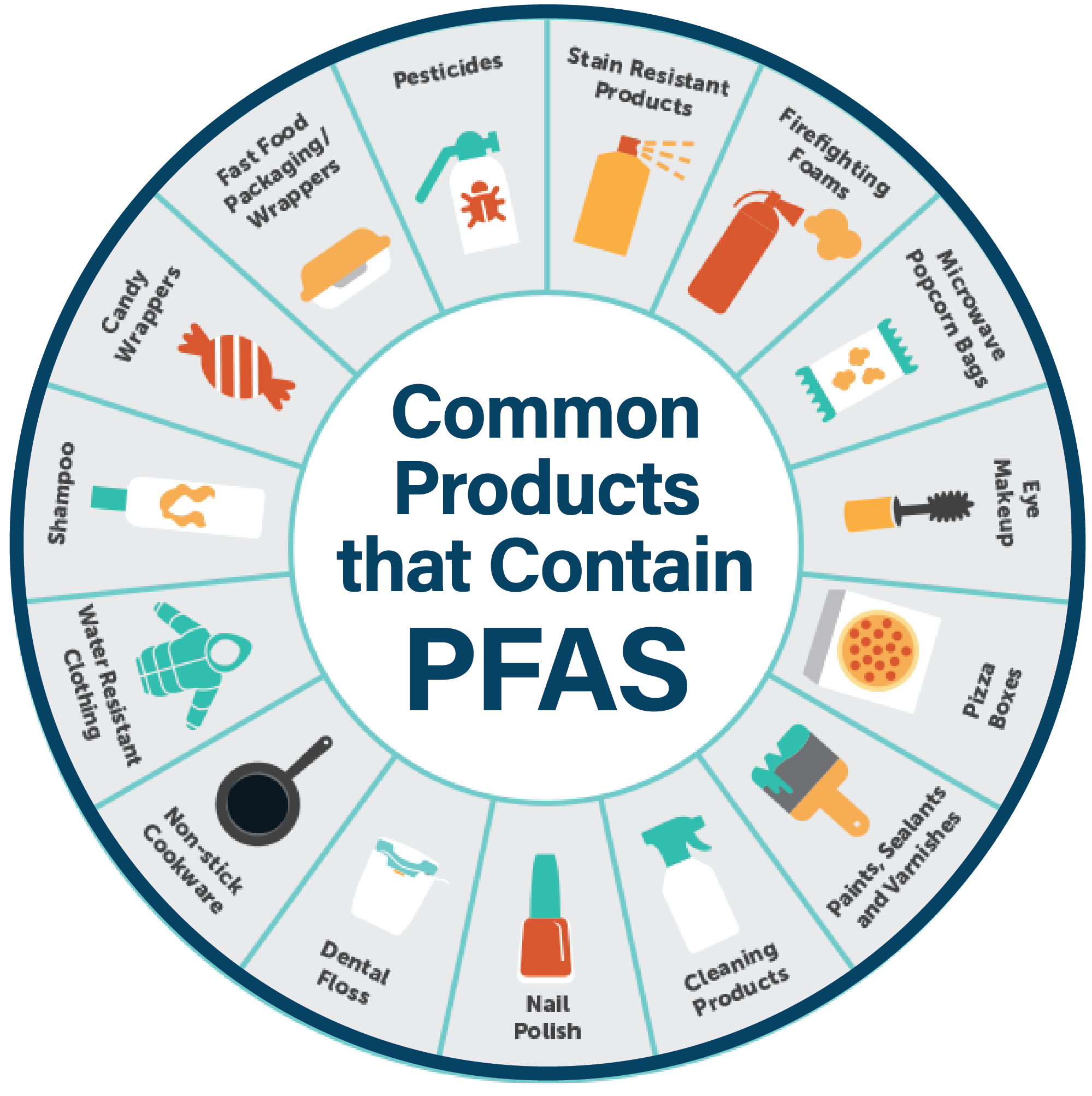
There are thousands of different PFAS chemicals in use today across many industries
Consumer Uses
PFAS's water- and grease-resistant properties made it popular to use in consumer products.
Examples of its use in products include:
• Water-repellant sprays for footwear, fabrics, and outerwear
• Stain-resistant carpets and nonstick cookware
• Food packaging
• Polishes, waxes, and cleaning products
The Human Health Impact of PFAS Chemical Exposure
Potential Exposure to PFAS in Contaminated Drinking Water
When consumers use products that contain PFAS, the chemicals end up in landfills and wastewater treatment plants, where they can further contaminate groundwater and surface water.
Human exposures to high levels of PFAS have been documented in places near facilities known to manufacture PFAS chemicals and military bases with extensive firefighting training activities.
High levels of PFAS in drinking water are the pathway of exposure of greatest concern. Researchers are still studying the extent to which this pathway impacts human health. The U.S. Environmental Protection Agency (U.S. EPA) in 2016 issued drinking water health advisories for PFOS and PFOA that set a non-regulatory advisory level of 70 parts per trillion (ppt), individually or combined. For more information, see the OHA Drinking Water Services emerging contaminants webpage.
U.S. Environmental Protection Agency (EPA) Administrator Lee Zeldin outlined upcoming agency action to address Per- and Polyfluoroalkyl Substances (PFAS). In this suite of actions, Administrator Zeldin announced a long list that included in part the designation of an agency lead for PFAS, the creation of effluent limitations guidelines (ELGs) for certain PFAS to stop these forever chemicals from entering drinking water systems, and initiatives to engage with Congress and industry to establish a clear liability framework that ensures the polluter pays and passive receivers are protected. In line with Administrator Zeldin’s Powering the Great American Comeback initiative, EPA’s work in this space will advance Pillar 1: Clean Air, Land, and Water for Every American, and Pillar 3: Permitting Reform, Cooperative Federalism, and Cross-Agency Partnership.
Several states, particularly those with PFAS manufacturing facilities or large military bases with high use of firefighting foam, have enacted drinking water standards more stringent than the EPA’s advisory (Oregon, California).
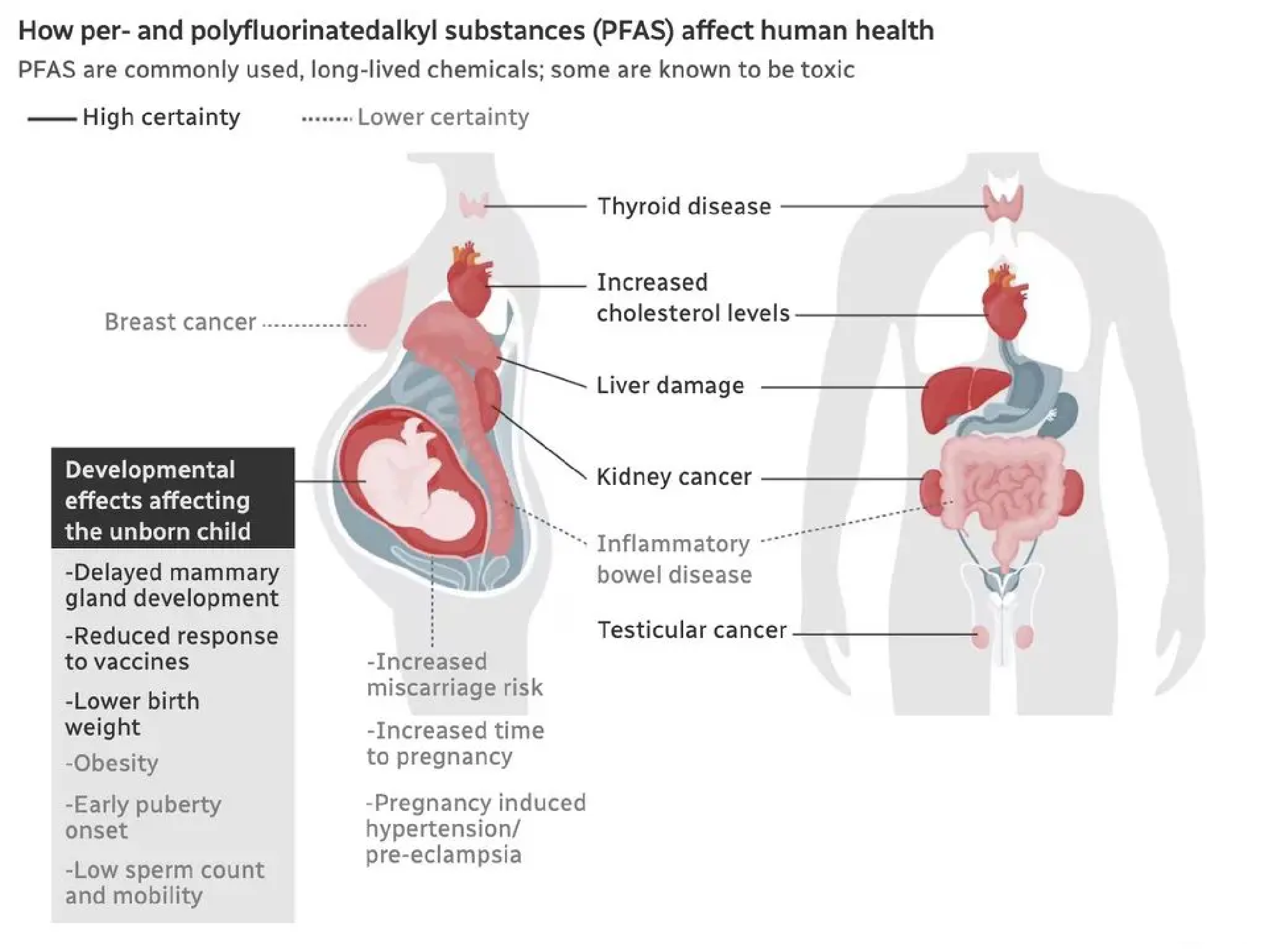
PFAS, "forever chemicals," pose significant health risks, according to the CDC, because they build up in the body and do not easily break down.
Exposure is linked to:
• Increased cholesterol
• Liver enzyme changes
• Decreased vaccine response
• Thyroid disease
• Low infant birth weights
• Increased risks of kidney, testicular, and other cancers.
Can I get tested for PFAS?
If tested, most people in the U.S. would have PFAS measured in their blood. Since there are no health-based screening levels for specific PFAS, healthcare providers cannot interpret blood test results to determine their health implications. Tests cannot be used to diagnose if PFAS are the cause of adverse health effects.
Testing for PFAS exposure is not a routine clinical test. Testing blood for PFAS levels requires the services of a specialized laboratory. It is unlikely that health insurance would cover the testing cost, and Rose City Laboratories does not test blood at this time.
More information:
What is Oregon doing about PFAS?
Oregon Department of Environmental Quality (DEQ) is working to protect residents from PFAS by minimizing exposure risks from known sources and actively investigating new and potential sources. DEQ has also taken actions to align with the U.S. Environmental Protection Agency's 2021 strategic roadmap for addressing PFAS. While scientific understanding of PFAS is constantly evolving, the need for immediate action to assess, prevent, and mitigate contamination is clear. To address these urgent challenges, DEQ developed an agency-wide PFAS Strategic Plan, which outlines a path forward, focusing on strengthening our scientific understanding, managing existing contamination, and preventing future pollution.
DEQ PFAS Strategic Plan – June 2025
Between 2013 and 2015, all larger public drinking water systems and several smaller systems in Oregon overseen by the Oregon Health Authority (OHA) were required to monitor for six PFAS under the EPA’s Unregulated Contaminant Monitoring Program. None of the Oregon public water systems had detectable levels of the chemicals using the best testing methods available at the time. For more information, see the OHA Drinking Water Services emerging contaminants and PFAS webpages.
OHA Environmental Public Health is providing toxicological and health education support to DEQ and other partners who are working to understand and reduce potential PFAS-related exposures at specific sites and statewide.
DEQ is working with landowners of several sites in Oregon where PFAS have been found in one or more of the following media: groundwater, soil, surface water and stormwater. Contamination at these sites appears to be related to firefighting foam. Landowners are voluntarily assessing the contaminated sites with DEQ oversight and consultation as part of voluntary investigations of historical firefighting foam use and storage areas. DEQ is also tracking proposed actions by the federal government and other states to determine how they may best support Oregon’s needs.
DEQ’s Toxic Reduction and Safer Alternatives programs are also working to identify alternatives for PFAS in food packaging; coordinating with the state of Washington on PFAS-related efforts; collaborating with the Interstate Chemicals Clearinghouse and other states to assess firefighting foam alternatives; promoting awareness that individuals can purchase PFAS-free consumer products; and promoting PFAS-free materials in state purchasing contracts.
PFAS Designated as Hazardous Substances in Oregon (2025 Rulemaking)
Oregon finalized a rule (Sept. 2025) designating six PFAS as hazardous substances under state law:
PFOA
PFOS
PFHxS
PFNA
HFPO‑DA (GenX)
PFBS
This empowers DEQ to mandate investigation, cleanup, and remediation at impacted sites. DEQ also categorizes PFAS‑related sites into:
Tier 1 (highest priority): airports, fire‑training sites, facilities with aqueous film‑forming foam (AFFF) use/storage, refineries, bulk fuel sites, plating operations, biosolids application areas, and other sites near drinking water sources.
Tier 2: semiconductor facilities, pulp and paper mills, coatings manufacturers, etc.
LEARN MORE
Statewide PFAS Strategy, Rulemaking & Regulatory Expansion
DEQ is engaged in extensive PFAS governance work, including:
a. PFAS Strategic Plan Implementation
DEQ is developing and implementing an agency‑wide PFAS plan focused on:
Reducing PFAS sources in consumer and commercial products
Managing PFAS releases and emissions
Strengthening scientific data for decision‑making
Engaging communities and stakeholders
LEARN MORE
b. Rulemaking to Regulate PFAS
DEQ is conducting rulemaking to:
Regulate PFAS as hazardous substances (finalized in 2025)
Develop analytical testing methods for ongoing cleanup work.
LEARN MORE
c. Cleanup Program Activities
DEQ’s Cleanup Program is identifying and prioritizing PFAS release sites, with an updated risk‑based concentration (RBC) system expected to incorporate PFAS by the end of 2025.
DEQ now regulates six PFAS compounds at cleanup sites in the same way as other hazardous contaminants.
LEARN MORE
Consumer Product & Pollution Prevention Actions
DEQ’s Toxic Reduction and Safer Alternatives Programs target PFAS reduction through:
Identifying safer alternatives to PFAS in food packaging
Coordinating with Washington state on PFAS initiatives
Participating in the Interstate Chemicals Clearinghouse to evaluate PFAS‑free firefighting foam alternatives
Promoting consumer awareness of PFAS‑free products
Encouraging PFAS‑free materials in state procurement
LEARN MORE
Continued Monitoring & Environmental Surveillance
DEQ is developing an updated statewide site prioritization map for PFAS contamination and risk evaluation.
Ongoing monitoring includes public water systems, fish tissue sampling, and environmental media assessment statewide. LEARN MORE
Growing Evidence of PFAS Presence in Oregon (2026 Data)
Recent multi-agency findings show PFAS present in:
Groundwater, soil, drinking water, and fish tissue
Fish exceedances documented across major Oregon waterways (e.g., Columbia Slough, Willamette River, Rogue River)
A 2026 contamination analysis notes that up to 800,000 Oregonians may rely on wells with varying PFAS levels, indicating the state’s increasing focus on monitoring and mitigation.
LEARN MOREIn Summary
Oregon is taking a multi-agency, multi-pronged approach to address PFAS contamination—incorporating public health oversight, site investigation, hazardous substance regulation, cleanup requirements, product safety efforts, and ongoing environmental monitoring. The state is steadily expanding its regulatory authority and technical capacity in alignment with federal PFAS policy developments.
What are Other Government Agencies Doing?
EPA Announces It Will Keep Maximum Contaminant Levels for PFOA, PFOS
EPA intends to provide regulatory flexibility and holistically address these contaminants in drinking water
May 14, 2025 | EPA Press Office press@epa.gov
WASHINGTON – U.S. Environmental Protection Agency (EPA) Administrator Lee Zeldin announced the agency will keep the current National Primary Drinking Water Regulations (NPDWR) for perfluorooctanoic acid (PFOA) and perfluorooctane sulfonic acid (PFOS), which set nationwide limits for these “forever chemicals” in drinking water. The agency is committed to addressing Per- and Polyfluoroalkyl substances (PFAS) in drinking water while following the law and ensuring that regulatory compliance is achievable for drinking water systems.
Summary of Key 2026 EPA PFAS Regulations
Federal Drinking Water Standards (NPDWR):
The EPA has finalized enforceable drinking water standards for six PFAS.
Maximum Contaminant Levels (MCLs):
PFOA, PFOS: 4.0 parts per trillion (ppt)
PFNA, PFHxS, HFPO‑DA (GenX chemicals): 10 ppt
Compliance Timeline:
2027: Public water systems must complete initial PFAS monitoring and begin public notifications of violations.
2029: Required deadline to implement treatment technologies that bring PFAS levels below MCLs.
Reporting & Data Collection:
Under TSCA, manufacturers and importers of PFAS (or PFAS‑containing articles) going back to 2011 must report detailed information on production, use, and disposal.
Upcoming Regulatory Actions:
EPA plans to update NPDES wastewater permits, potentially requiring PFAS monitoring for industrial dischargers (expected review/proposals in late 2025–2026).
Legal & Regulatory Context:
EPA’s PFAS drinking water rules are facing legal challenges from some industry groups, but the EPA is maintaining the standards as of early 2026.
States continue adopting their own PFAS laws, including product bans (e.g., textiles, cosmetics, carpets) taking effect between 2026 and 2028.
The FDA has confirmed that PFAS‑based grease‑proofing substances are no longer authorized for food-contact materials in the U.S., with manufacturers phasing them out.